



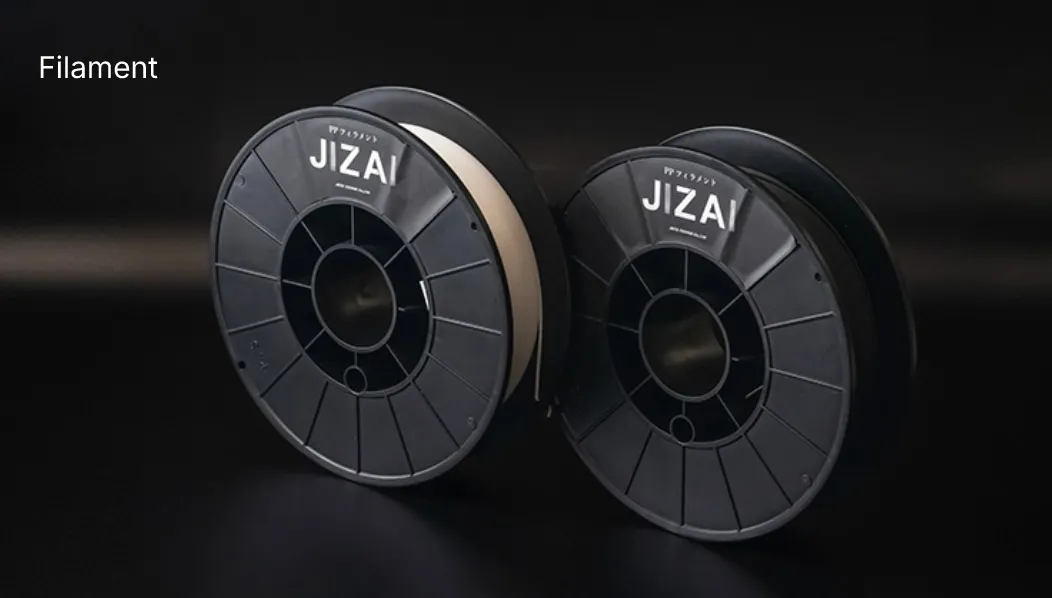


Features

Exceptionally Stable
Printing with Minimal
Warping
- Reduces the high shrinkage inherent to polypropylene, significantly minimizing warping
- Excellent build plate adhesion ensures stable printing from the very first layer
- Combination of reduced shrinkage and strong bed adhesion dramatically improves resistance to warping
- Maintains dimensional stability even in large-scale prints and at corners and edges
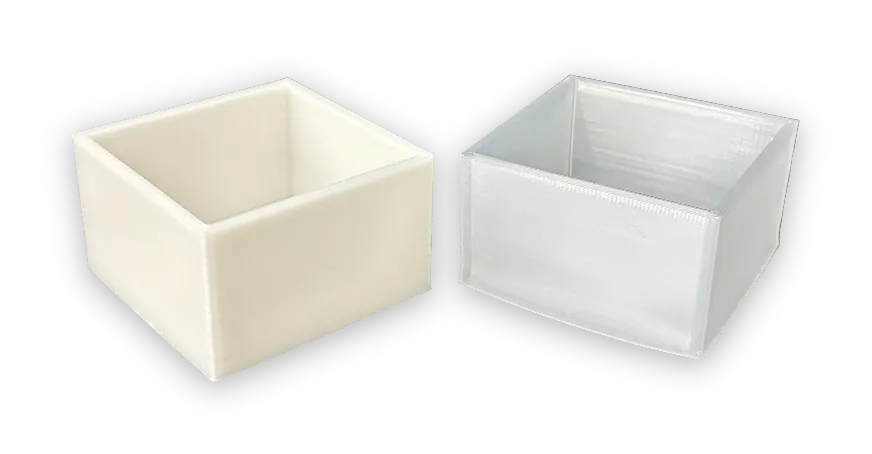
Comparison of warpage between JIZAI and general-purpose PP

Effortless Printing that
Boosts Productivity
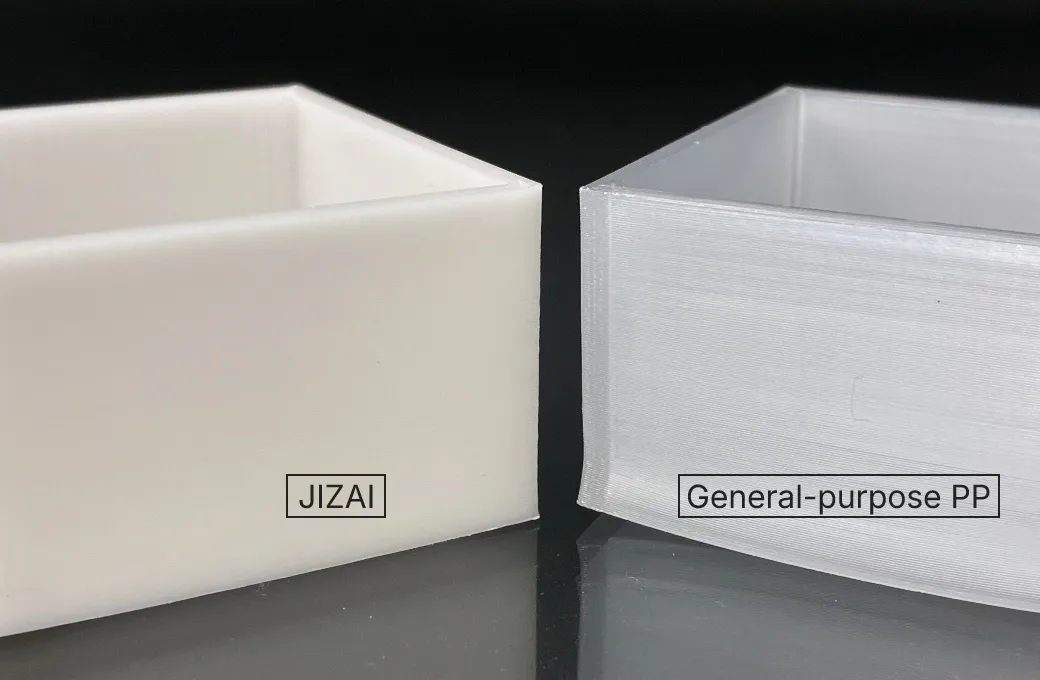
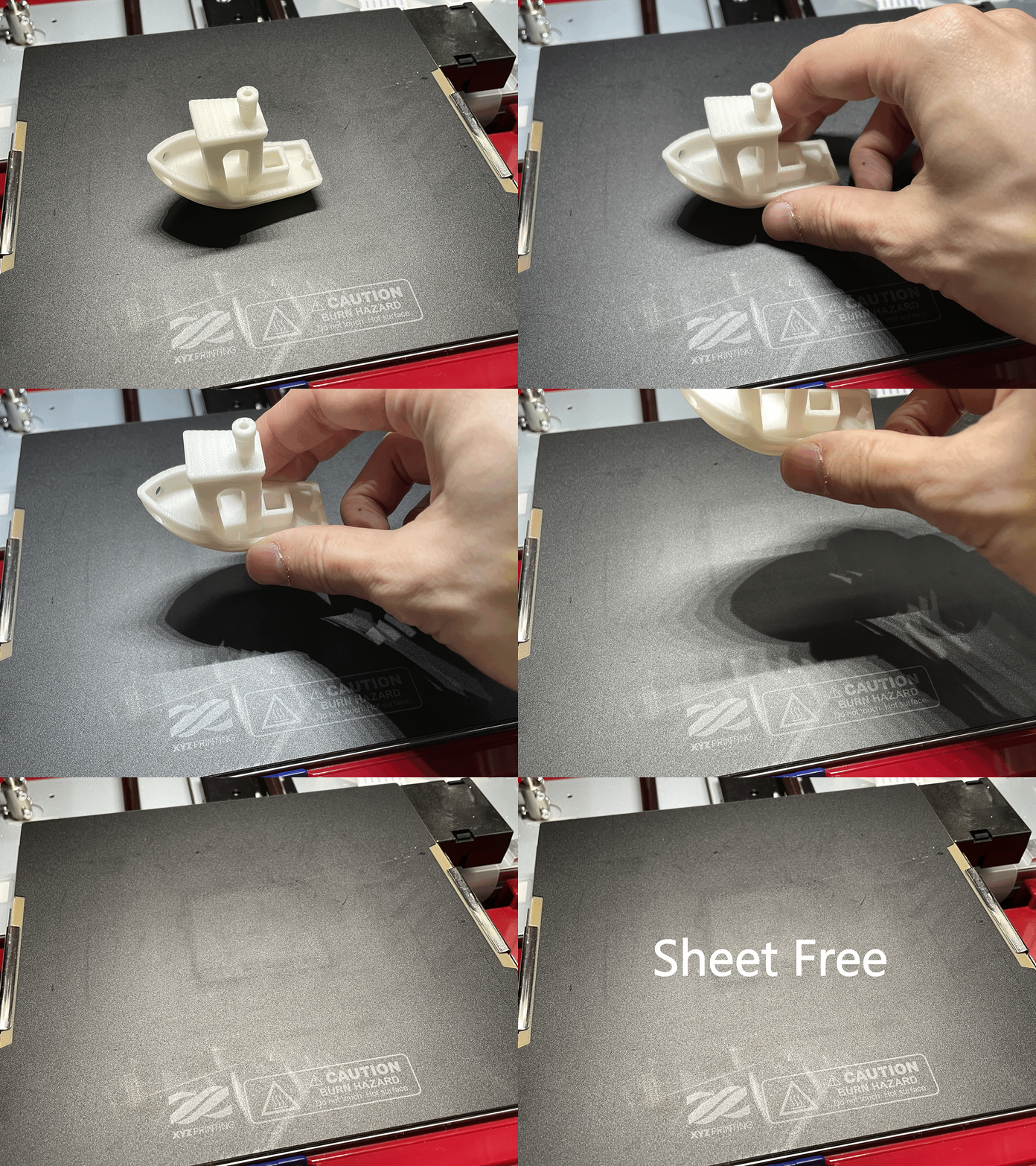
- Delivers stable printing without the need for glue or adhesive sheets
- Requires no pre-drying and can be used without concern about moisture absorption
- Reduces time spent tuning settings to prevent warping
- Supports can be printed using the same material and are easily removed by hand after printing

Flexible, Durable,
and Chemically
Resistant Performance
- Flexible enough to withstand repeated bending without cracking
- Post-processing, such as cutting and drilling, is smooth and easy
- Resistant to chemicals and oils, ensuring reliable performance in real-world applications
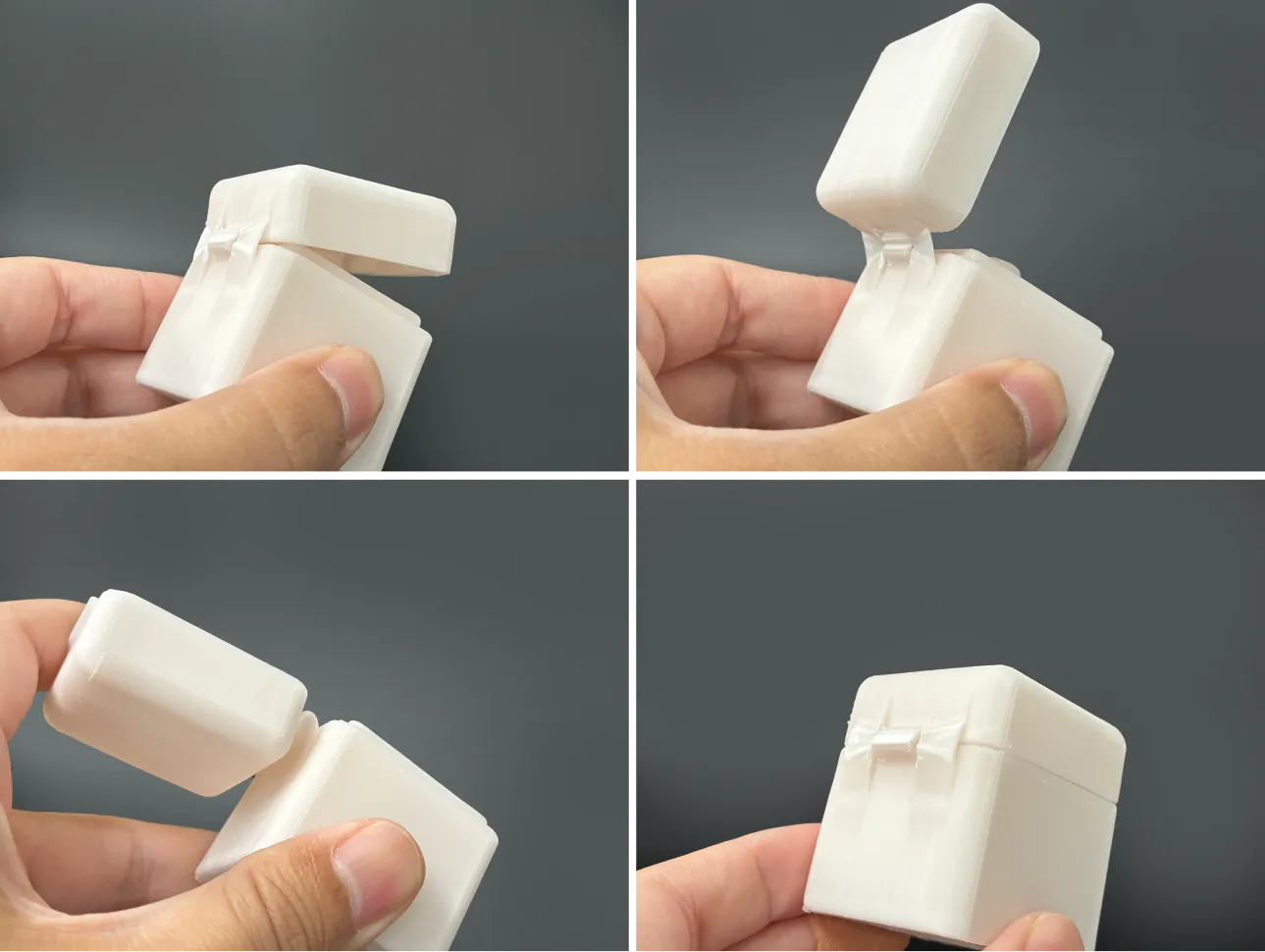
JIZAI Movie

Print
Settings
FDM (Filament)
Tested on Bambu Lab H2C
- - Nozzle diameter: 0.4 mm or larger
- - Nozzle temperature: 190–230 °C
- - Build plate temperature: 90–110 °C
- - Build plate type: Engineering Plate, Smooth PEI Plate
- - Enclosure Heating: Not required
FDM (Pellet Extrusion)
Tested on WASP 4070HDP
- - Nozzle diameter:0.6 mm or larger
- - Extruder Temperature:180–210℃
- - Nozzle Temperature:180–240℃
- - Stage Temperature:90–110℃
- - Stage Material:ABS Sheet
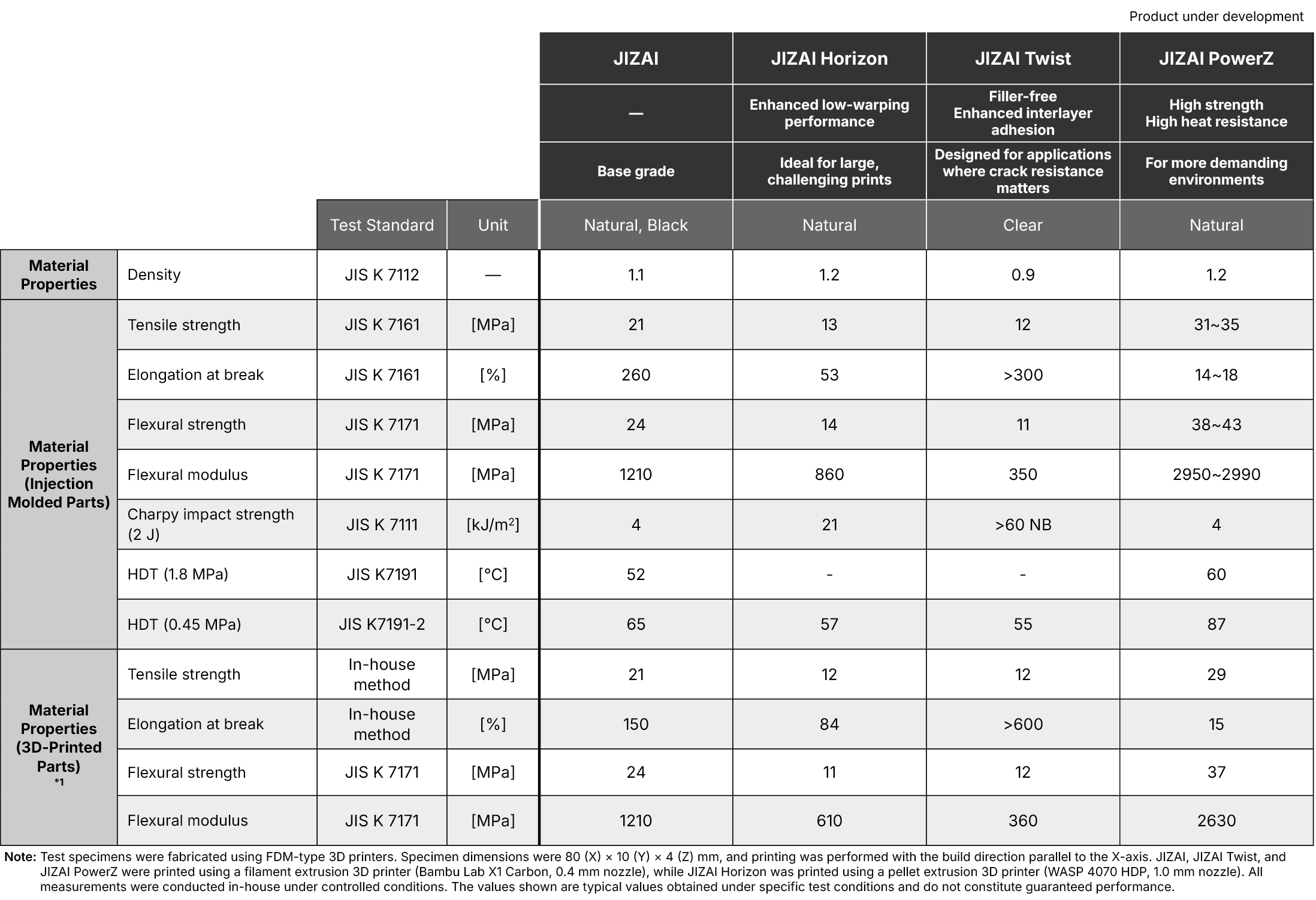
Feature Comparison
JIZAI vs. Other Materials

Product
Lineup
Frequently Asked Questions
What are the recommended drying conditions for this material?
- Polypropylene has very low moisture absorption, so drying is not required.
Do you recommend any specific support material?
- Supports can be printed using JIZAI itself.
After printing, they can be easily removed by hand.
A support z-distance of 0.2 mm is recommended.
Do I need to set the build plate to a high temperature?
-
If the build plate temperature is too low, warping is more likely to occur.
Set the build plate within the recommended temperature range.
Is an enclosure required?
- An enclosure is not strictly required, but it is recommended to help reduce warping.
What is the recommended internal temperature?
-
Active enclosure heating is not required; however, if used, a temperature of 40–50 °C is
recommended.
Excessively high enclosure temperatures may cause filament clogging.
What is the heat resistance temperature?
- The heat resistance temperature of JIZAI is 65 °C, based on the heat deflection temperature (HDT) at 0.45 MPa. For other grades, please refer to the lineup table.
The printed part won’t come off the build plate. What should I do?
-
As the build plate temperature drops, parts can become harder to remove.
Reheating the build plate to 90 °C or higher will make removal easier.
Nikken Cutlery “Flexible Paper Knife”
What build plate materials are recommended?
- A smooth PEI build plate is recommended.
Other materials, such as polycarbonate and glass, can also be used without issues. Aluminum build plates, however, have poor compatibility; for better warping control, apply a PP sheet or a similar surface treatment.
Can you provide a Safety Data Sheet (SDS) and a Technical Data Sheet (TDS)?
-
Yes. These documents are available upon request.
Please contact us for more information.
